What Changes When AI Acts as Your Senior Engineering Team (Not Just a Code Generator)
By Nora Peterson
Most AI development tools follow the same pattern. You describe what you want, they generate code, and you iterate until something works. The speed is impressive, but it's also why most AI-built applications never reach production.
The gap between generated code and deployed software is wider than it appears. Bridging it requires the same things it always has: architecture decisions, integration planning, validation processes, and deployment strategy. These are engineering tasks, not coding tasks.
The difference matters because code generation and software engineering solve different problems. Code generators help you write code faster. Engineering rigor helps you build software that works. One creates velocity, the other creates outcomes.
This article explains why Morph approaches application development as an engineering problem rather than a code generation problem, what changes as a result, and who that approach serves best.
What Engineering Teams Actually Do (Beyond Writing Code)
When you hire an engineering team to build software, most of their time isn't spent writing code. They spend it understanding what needs to be built, designing how it should work, planning the implementation sequence, and validating that what they built actually solves the problem.
The work breaks down into stages:
Requirements clarification happens before any code is written. Engineers ask questions about edge cases, identify constraints, surface assumptions, and confirm they understand what success looks like. This prevents building the wrong thing.
Architecture design determines which technologies to use, how components connect, where data lives, and how the system scales. These decisions create constraints that make everything else possible. Get them wrong and you rebuild later.
Implementation planning sequences the work into logical phases. Authentication before user features. Core entities before dependent workflows. Foundation before customization. This ordering prevents rework.
Progressive validation checks that what's being built remains aligned with specifications, behaves as expected under realistic conditions, and integrates correctly with other systems. This catches problems while they're cheap to fix.
Deployment and operations ensure the application runs reliably, handles real user load, and can be maintained over time. This is what makes software production-ready rather than demo-ready.
None of this is about typing faster. It's about reducing the expensive failures that come from skipping these stages.
What Gets Lost When You Skip the Process
Most AI code generators optimize for speed of initial generation. You get results quickly, but speed at the wrong stage creates problems at every subsequent stage.
Architecture decisions happen implicitly. The AI makes technology choices based on training data, not your specific requirements. You inherit those choices without seeing them, understanding them, or validating whether they fit your needs. When they don't, you discover it after significant work is already done.
Requirements gaps surface late. Without a clarification stage, ambiguities get resolved through assumptions. The AI assumes what you meant. You assume the AI understood. The gaps become visible when the application doesn't behave as expected, often after you've moved on to other features.
Deployment reveals unmet requirements. Applications that work locally fail in production because deployment requirements weren't considered during development. What worked on your machine doesn't work when multiple users access it simultaneously or when data needs to persist reliably.
The real cost isn't the time spent iterating but the applications that can't be used without being rebuilt. Many AI builders optimize for speed of first output. Morph optimizes for reliability of final outcome.
How Morph Executes an Engineering Process
Morph approaches every build as a system-level problem, not a code-generation task. This means progressing through the same stages required for disciplined software engineering, handled systematically with clear validation points.
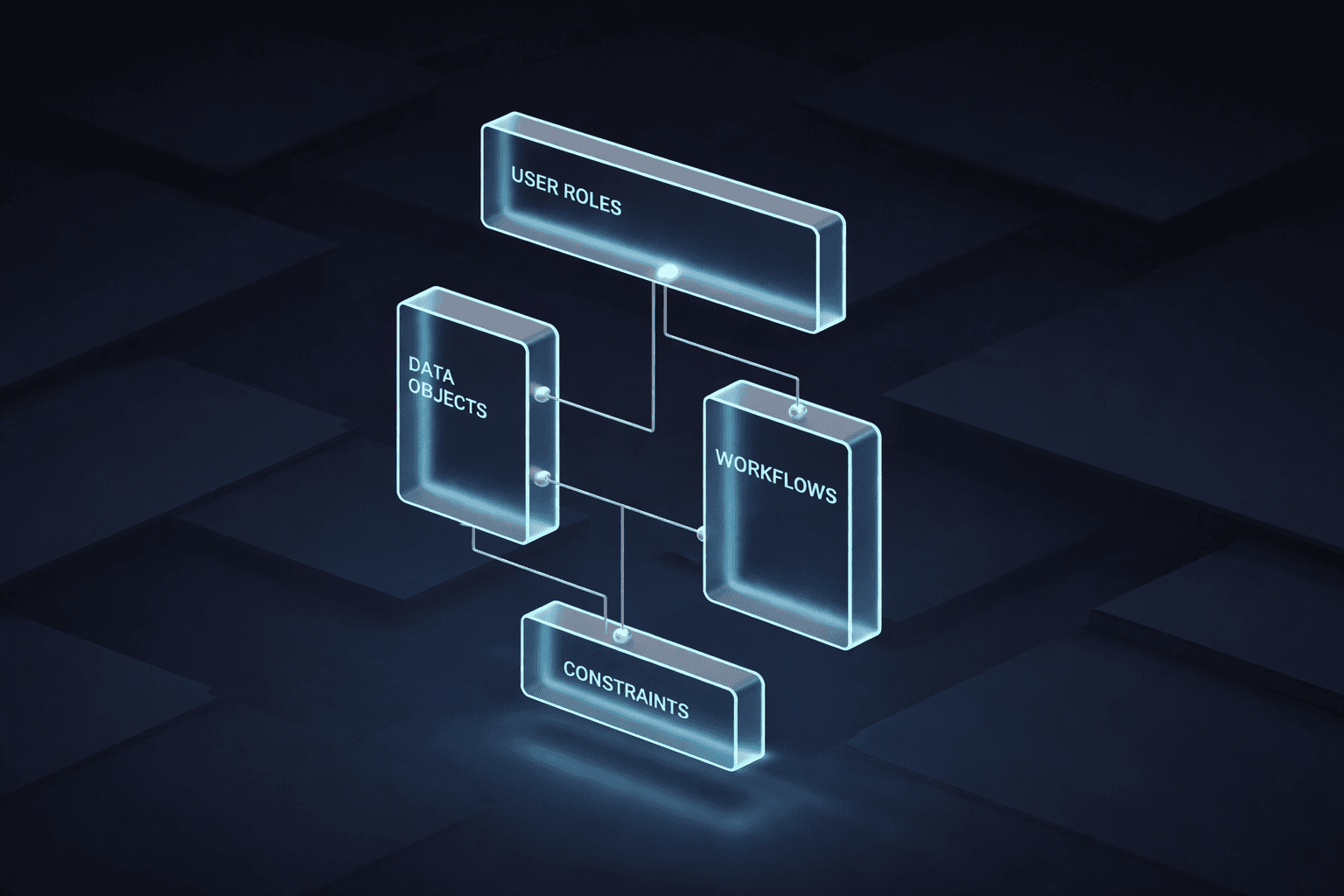
Requirements clarification produces a structured specification. Before building anything, Morph works through your description to identify gaps, surface ambiguities, and confirm constraints. This results in a requirements document that defines functionality, workflows, and success criteria. You review and approve this before implementation starts.
Architecture planning creates a technical blueprint. Morph designs the system architecture, selects appropriate technologies, and plans component structure. This includes decisions about the tech stack, database design, authentication approach, and integration points. These decisions are documented and visible. You can validate that they make sense for your needs before any code is written.
Sprint-based implementation sequences the work. Rather than generating everything at once, Morph breaks development into sprints, each focused on a specific layer or capability. Authentication and roles first. Email services next. Core business entities. Then dependent features. Each sprint completes before the next begins, creating natural checkpoints.
Progressive validation happens throughout the build. The system continuously checks alignment with specifications and confirms integrations work before moving forward. Problems surface during development, not after deployment.
Deployment is built in from the start. Every Morph build assumes production use. The application is deployed, accessible via a live URL, and ready for real users when the build completes. Deployment isn't a separate phase that happens later but part of the definition of done.
When a Morph build finishes, you have documentation of what was built, why decisions were made, and how the system works. You also have a deployed application ready to use.
Why Process Transparency Builds Confidence
This structured approach creates artifacts that matter beyond the code itself. For sophisticated buyers, seeing how software is built matters as much as the final output.
The requirements specification and architecture plan aren't internal planning documents but shared artifacts that create accountability.
You can validate before implementation starts. Reviewing the architecture plan lets you confirm the technology choices make sense, the integration approach will work with your systems, and the design fits your long-term needs. Changes at this stage are straightforward. Changes after implementation are expensive.
Technical stakeholders can review and approve. If you need sign-off from security, compliance, or IT teams, having architecture documentation makes that possible. Concerns surface early rather than after the application is complete.
Specifications define what "done" means. When both parties agree on a detailed requirements document and architecture plan, there's no ambiguity about what the application should do or how it should work. This clarity is what makes outcome-based pricing possible.
Sprint structure makes progress visible. Rather than a black box where code appears, you see development across defined phases and can validate direction before everything is complete.
The transparency isn't overhead, but what enables confidence that what's being built will actually work.
What This Enables That Code Generators Can't
Treating application development as an engineering problem changes what becomes possible.
Outcome-based pricing works because success is defined upfront. The structured specification and architecture plan establish exactly what will be built. When the application matches that specification and functions as designed, the outcome is achieved. There's no ambiguity about whether it's done or whether it works. You're not paying for development time or iteration cycles but for an application that works as specified.
Enterprise validation becomes straightforward. Security, compliance, and architecture teams can evaluate what will be built before resources are committed. The documentation supports their governance processes rather than fighting them.
Integration planning happens before integration attempts. Knowing how systems will connect prevents late-stage incompatibilities that require rework or architectural compromises.
Applications can scale because they're designed to. Architecture decisions about data, concurrency, and performance are deliberate rather than inherited from training data.
You're accountable for specifications, not developer management. Your role is defining what needs to be built and validating the outcome, not managing engineers or debugging implementation details.
These capabilities exist because the process creates the foundation for them.
Why Process Is the Product
Most AI development tools differentiate on model quality, generation speed, or supported frameworks. Morph differentiates on engineering process.
The sprint structure, structured specifications, architecture planning, and progressive validation aren't features layered on top of code generation. They are the product. The code is the output of a disciplined engineering process.
This approach serves buyers who understand the value of engineering rigor but don't want to hire, manage, and coordinate an engineering organization to get it.
For teams evaluating AI development tools, the critical question isn't how fast code gets generated but whether what gets built will work in production, integrate with existing systems, and scale as usage grows.
If your goal is rapid experimentation or quick visualization, tools optimized for speed make sense. If your goal is deployed software that solves real problems for real users, engineering process matters more than generation speed.
Understanding which problem you're solving determines which approach fits.